Who Decides the Ocean? Uncovering Carbon, Power, and Coastal Livelihoods
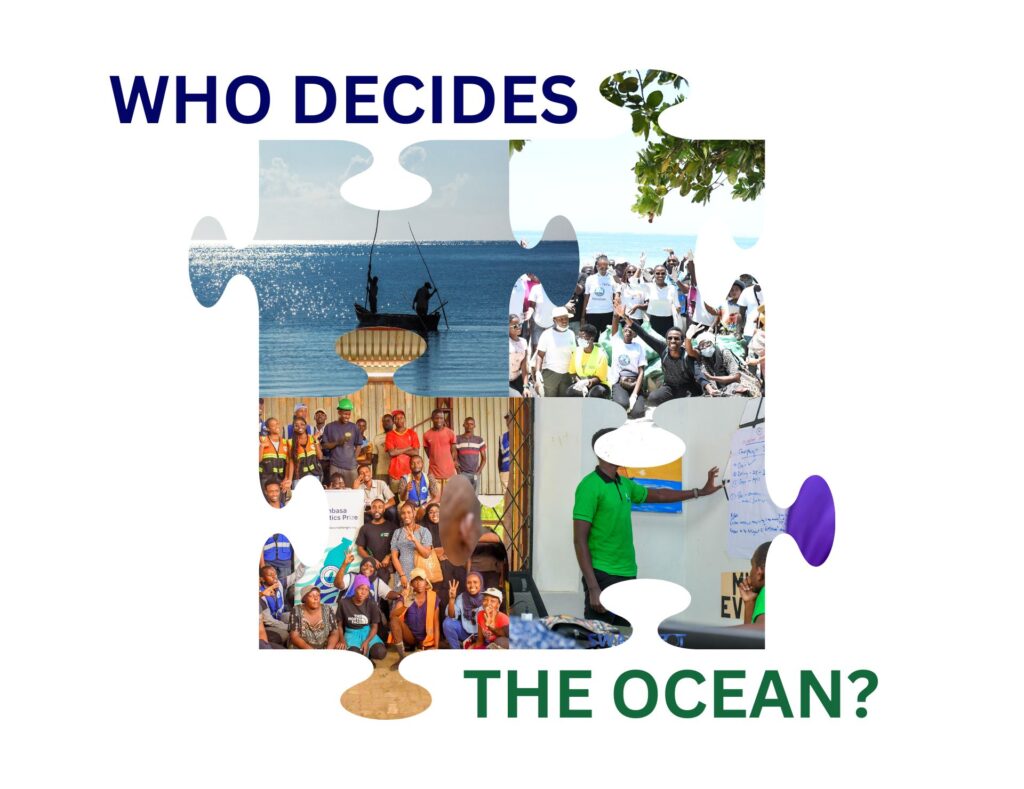
Try a small experiment. Ask ten people on any Mombasa beach who decides what happens to the ocean in front of them. Then count how many of the answers begin with “we.”
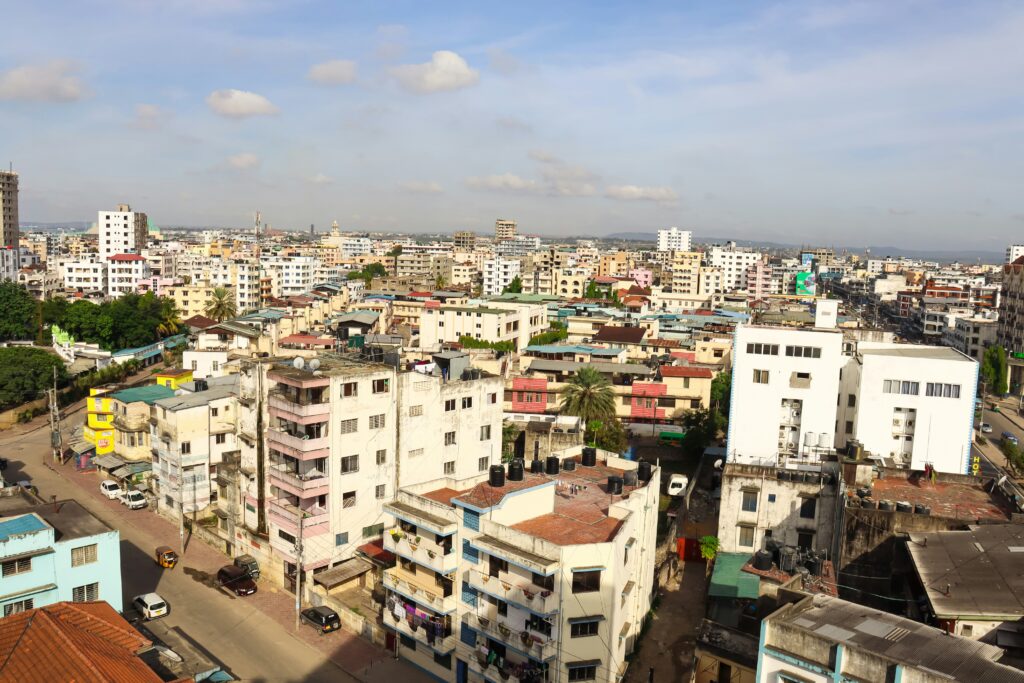
Mombasa, Kenya
I suspect you will hear a lot of “they.” They are bringing something called the Blue Economy. They are measuring carbon in the mangroves. They are the ones who passed a law about bottles. The pronoun is not rudeness, and it is not apathy. It is an accurate description of where the decisions are made and who is standing in the room when they are.
The ocean is being decided in at least three places at once. In Blue Economy plans, which promise investment in ports, fisheries and tourism along a coast that has waited a long time to be taken seriously. In carbon markets, where a hectare of mangrove can become a financial product that someone in another country buys to balance a ledger. And in waste law, where the question of who pays for the plastic that ends up on the sand is slowly being answered on paper. Each of these has real merit. Each arrives with good intentions. That is exactly the problem, because good intentions do not require chairs for anyone else.
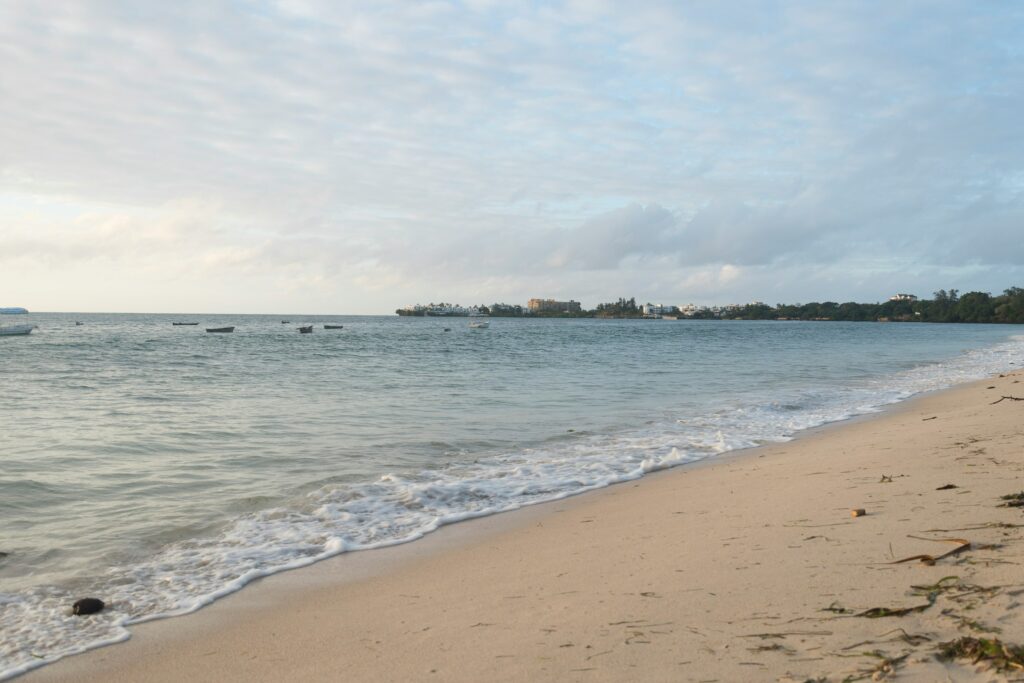
Nyali Beach, Mombasa. Kenya.
To see how this goes wrong, look north. In Merti, in Isiolo County, a Pulitzer Center-supported investigation by journalists reporting for Africa Uncensored examined what happens when a large carbon project lands on land that people have grazed for generations. The Northern Rangelands Trust, an organisation that supports community conservancies, built a rangeland carbon project that now covers more than two million hectares of northern Kenya, and credits from it were reportedly bought by companies including Netflix and Meta. In Merti, residents say the conservancies arrived without proper consultation, and a retired chief told the reporters there had been no transparency in how they were set up. In 2023 the dispute turned violent and conservancy offices were burned. Residents took the matter to court, and a judge ruled that the conservancies in Merti had been established illegally, without the public participation the law requires. Separately, a carbon certifier suspended the project.
The Trust tells a different story, and it deserves to be heard. Its carbon director denies that it issues guns to conservancies and says that police reservists fall under the Kenya Police Service, not under the carbon project. The Trust has maintained that communities were informed and that the project has wide support. A 2023 report by Survival International alleged that the project had been developed without the free, prior and informed consent of the people whose land it covers, an allegation the Trust rejects. The story also records the argument that the cattle raids villagers link to the conservancies are the work of criminal networks, unrelated to carbon. Nobody should pretend the picture is simple. But a court did find that the process was wrong, and that is the part I cannot stop thinking about.
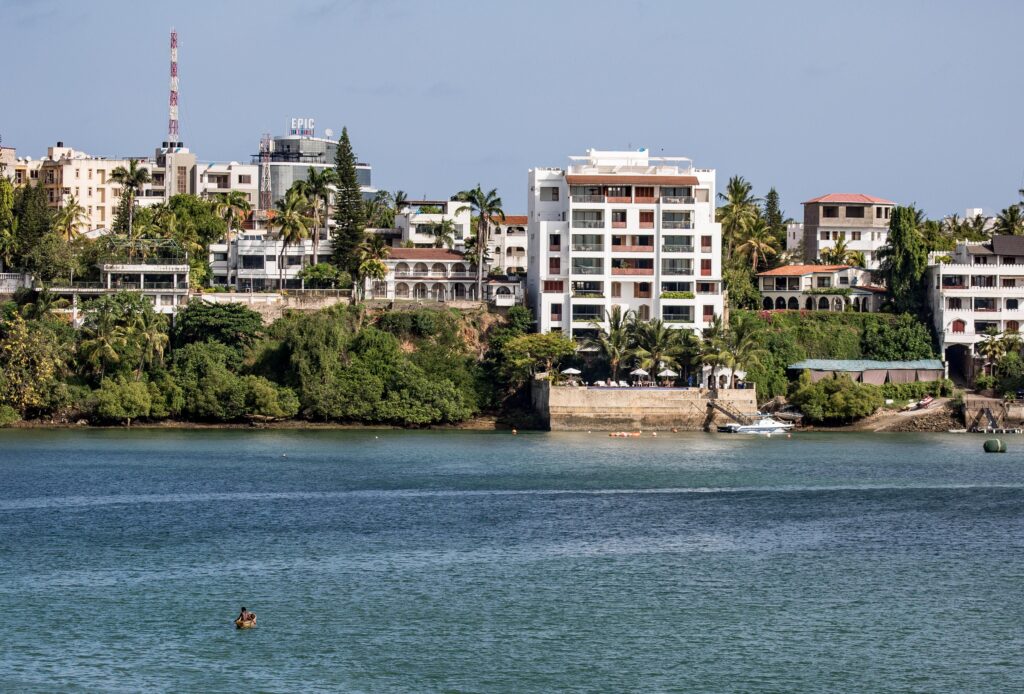
Hotels in Mombasa releasing sewarage system into the ocean
What struck me most is what the people who went to court did not say. By their own account, they were not against carbon money. Their objection was to how it arrived: already planned, already signed, explained afterwards if at all. That distinction matters more than any argument about whether carbon markets are good or bad. A project can be ecologically sound and still illegitimate, because legitimacy is not a property of the carbon. It belongs to the process. Consent is not a feeling a project has about itself. It is something other people give, in public, while they still have the power to refuse.
Part of what makes these decisions so hard to contest is that they arrive in a language most people were never taught. Carbon accounting runs on baselines, verification periods and crediting cycles. A mangrove inventory is expressed in tonnes of carbon dioxide equivalent over twenty years. None of it is mysterious, but none of it is explained at a landing site either. One voice in a Deutsche Welle documentary on the northern project says that nobody there knows about carbon, even as credits from that land were being sold. When a deal can only be understood by people who already have lawyers, consultation can become a ceremony: a meeting is held, an attendance register is signed, and the register is later produced as proof that everyone agreed. Translation is therefore not a courtesy. It is the first form of power-sharing. A fisher who can read the terms in Swahili, and has someone to ask about them, has already been moved from the footnotes to the table.
There is a pattern here that the coast should recognise. In carbon deals and in grand marine plans alike, the benefits tend to be announced in capitals and in other countries, while the costs are paid on the shoreline: in a closed fishing ground, in a rule that criminalises what a family has always done, in a promised share that never quite appears. Ask of any ocean project who benefits and who pays, and then ask whether those two groups ever met.
Now bring the Merti story to the coast and notice what changes, and what does not. Kenya’s Constitution treats the land between the high and low water marks as public land, held by the national government in trust for the people. That sounds like protection, and in some ways it is. But there is a catch in how public ownership works in practice. A community that owns land can say no, because the land is theirs. A beach belongs to everyone, which makes it very hard for any particular person to claim the standing to refuse. A resource owned by everyone is decided, in practice, by whoever arrives with a folder.
Kenya has tried to answer this, and it deserves credit for trying. The Climate Change (Carbon Markets) Regulations, gazetted in May 2024, require carbon projects to pay an annual social contribution to host communities. The strongest consent language, as lawyers who have studied the rules describe them, attaches to projects on community land, while blue carbon projects are classed as public projects because of where mangroves and the foreshore sit. I am not a lawyer, and anyone relying on this should test it with one, but the pattern is worth noticing: the place where the sea meets the land may be the place where the formal safeguards are thinnest. Then there is the arithmetic. Analysts have warned that a percentage of proceeds means little until you know what it is a percentage of. If wages and costs come out first, a project can comply perfectly while the money reaching the village shrinks toward a rounding error. The law gives the headline. Governance decides the decimal places.
Meanwhile, there is a group of people who are supposed to have a voice already. Since regulations introduced in 2007, fishing communities along the Kenyan coast have organised into Beach Management Units, legally recognised groups of fishers, boat owners, traders and others who share a landing site, created precisely so that people who use the sea can help manage it. They are a serious attempt at the question this column asks. So is the European Union-backed Go Blue programme, launched in 2021, which says it puts coastal communities and their needs at the centre of its work. The intentions are not in doubt. The research on how such structures work in practice is sobering. A 2024 study on the south coast found that community-based management can reinforce existing inequalities, with women’s leadership resisted and their work undervalued. A Kenyan study of small-scale fishers and the Blue Economy found that engagement matters but is constrained by limited resources, institutional barriers and power imbalances. Even something as practical as a boat is a governance issue: the shortage of boats and equipment has pushed fishers into renting from intermediaries, often at high cost, which is part of why a European-funded programme has been delivering boats to coastal counties. A seat is not a voice, and a voice is not a vote. You can be formally included and still be effectively decided about.
None of this means carbon belongs nowhere near the coast. The honest counterexample is Mikoko Pamoja in Gazi Bay, Kwale, which began in 2013 on about 117 hectares of mangrove and is widely described as the first community-run blue carbon project in the world to sell credits for local benefit. It supports around 1,350 families in two villages, and its sibling, Vanga Blue Forest, covers 460 hectares. According to figures presented by a Kenyan development organisation before the projects expanded, community development funds were a little under a third of Mikoko Pamoja’s annual revenue and a little over a third of Vanga’s. These are modest sums, in the low tens of thousands of dollars, spent on water, school facilities and replanting mangroves. What interests me is not the amount but the machinery. Benefit sharing was settled at the design stage, before the money arrived. The activities are posted on noticeboards in the villages, where anyone can read them. A research institute sits on the steering committee to report on the results. Notice what made it work. It was not the carbon. It was the noticeboard, and the fact that the people who live beside those mangroves were in the room before the first credit was sold. It is also small, and small projects are easier to keep honest. The real test is whether the model survives scale, and the arrival of larger buyers with faster timetables.
Plastic puts the same question in a more practical form. Scientists at the Kenya Marine and Fisheries Research Institute, working from Mombasa, have counted what lands on our sand. In their first study of the Kenyan coast, across six beaches in Kilifi, Mombasa and Kwale, plastics and foam were the most abundant litter, and local products made up about 88 percent of what was collected. Food packaging accounted for roughly 91 percent of the branded litter. The same institute has estimated, extrapolating from its surveys, that between 1.6 million and 12.9 million plastic items pile up along the Kenyan coast every day, which is the kind of number that makes a Saturday cleanup feel like bailing out a boat with a teacup. A later audit on Mkomani beach in Mombasa found that PET bottles were the most common kind of packaging. The researchers’ own conclusion is almost an indictment of the national imagination: because so much of the litter is local, a local solution to waste management would considerably reduce the problem. The ocean is not receiving a foreign problem. It is receiving ours.
Kenya has begun to say who should pay. The Extended Producer Responsibility Regulations, in force since November 2024, make producers responsible for the packaging they place on the market, and in Mombasa a pilot with the producers’ own organisation, Kepro, is working with 1,000 households to separate their waste. Recyclers there say that cooperation with waste pickers and the county has created jobs for young people. Yet in August this year, a coalition that included the Kenya National Waste Pickers Association and several environmental groups urged the government to make producers’ obligations more binding and to formally integrate and pay waste pickers within the systems producers fund. Read that again. The people doing the physical work of the law are still asking to be counted by it.
It would be too easy to stop there and blame companies. Communities carry their share. A study in Gazi found that 55 percent of residents admitted to littering despite the 2017 plastic bag ban, and the researchers concluded that enforcement has to be combined with solutions that communities drive themselves. That is not an argument against involving people. It is the strongest argument for it. You cannot hold a community responsible for the sea while excluding it from the decisions about the sea.
I say this as someone whose organisation has run more than eighty beach cleanups and has spoken about waste and ocean pollution with more than 8,000 people, and I would do both again. Picking up plastic is honest work, and anyone who has stood on a littered beach at low tide knows the satisfaction of a filled sack. But a beach cleanup is perhaps the one public event in which those who did not make the mess are most likely to be holding the bag. A cleanup that never asks who produced the bottle, and who decides what happens when the next tide delivers another, is a very sincere way of staying out of the decision.
There is an objection I take seriously. The climate crisis is real, the sea is warming, and mangroves are disappearing faster than committees can meet. Is it not irresponsible to demand forums and consultations while the shoreline erodes? This is the argument every fast project makes, and it should always be examined for who it benefits. Urgency is the most reliable solvent of consent. It is also, to be fair, sometimes correct. But the lesson of Merti is that speed bought by skipping the room is borrowed, not saved. It came back as burned offices, a court judgment and a suspension, all of which cost more time than a few honest meetings would have. A project that cannot survive being explained to the people it affects was not ready to be built.
That is why a story from Isiolo belongs on the Kenyan coast. Not as a scandal imported from the north, and certainly not as a verdict on any single organisation, but as a set of questions that travel well. Who signed? Who was asked? Where does the money go, and who gets to read the receipt? Questions travel better than conclusions, which is why we are taking the reporting from Merti, translating it into Swahili and plain English, and turning it into short videos and infographics for three forums in which fishers, waste workers, young people, civil society and county officials can argue about it face to face. A Community Voice Lab has enabled coastal residents to document their own experience of how the sea is decided, so that the record of the coast is written partly by the people who live on it. Whether that changes a single decision is not something a four-month project can promise. What it can do is make sure that the next time someone arrives with a folder, a few more people know which questions to ask.
The ocean will outlast every agreement ever signed about it. The tide does not read contracts, and it does not care who held the pen. The open question is whether the people who live beside it will be in the room when the next one is drawn up, or only in the footnotes afterwards. So before we ask whether a project is green, let us ask who signed for the sea. If the answer is not “we,” the colour does not matter.
